
Shirley Court Docket Searches
Begin any Shirley court docket search with Indiana MyCase, the statewide search covering Odyssey courts. No local case-search page or payment portal exists for the town. No town court operates there now. Pull out your paperwork first. Read the case number, citation, or court name printed on it. Indiana case numbers open with two county digits. A number starting with 33 belongs to Henry County. A Shirley street address proves nothing, since the town crosses the Henry-Hancock line.
- Collect the case number, citation number, or exact party name.
- Open MyCase and select Case, Name, or Attorney search.
- Check the county prefix and assigned court in the result header.
- Read the CCS for status, filings, orders, and settings.
- Confirm urgent dates or missing records with the clerk that owns the case.
Searching by case number is the cleanest route most of the time. MyCase wants it without hyphens and without leading zeroes in the last group. Citation and cross-reference lookups need the exact value. With no identifier, start with a last name or exact business name. Then narrow with a first name, filing-date range, status, or court. A date-of-birth filter can bury a valid result if the court file lacks that value. Broad queries can hit the portal's 1,000-result cap.
Anonymous public searches cost nothing, though not every filed document appears online. Parties log in with an Indiana Courts account and access code. Attorneys go through the Courts Portal. Expect a CAPTCHA after repeated searching. MyCase is not the certified record, and its financial balance can lag recent transactions. When accuracy, certification, or a current balance matters, the clerk's record controls.
One Shirley, Two County Routes
The Shirley community page confirms the town straddles Hancock and Henry Counties. Geography is a clue, not an answer. No mailing address, event location, or bare mention of "Shirley" can tell you which clerk keeps a court file. Rely instead on the issuing agency. Use the court printed on a notice and the first two digits of the case number.
| Clue | What It Means | Next Check |
|---|---|---|
| Prefix 33 | Henry County case | Identify 33C01, 33C02, 33C03, or 33H01 |
| Other prefix | Another Indiana county | Use the court shown in MyCase |
| Town minutes | Local government record | Ask Shirley town government |
| CCS entry | Judicial case event | Ask the assigned court clerk |
Two people can say "Shirley" and mean entirely different county systems, which is exactly when the boundary check pays off. Run the identifier before you call any office. That one step cuts false matches and keeps the record request with the clerk who actually holds the file.
Inside Shirley Court Routing
Henry County's Rule 8 identifier list shows no current Shirley Municipal Court or Shirley Town Court. Treat town hall as a courthouse counter at your peril. The county's current trial-court identifiers are 33C01, 33C02, and 33C03, one for each Circuit Court. New Castle City Court uses 33H01. Older Henry Superior, County, and Knightstown Town Court identifiers are abolished. None of them is a live Shirley tribunal.
Henry County allocation rules send misdemeanors, most traffic infractions, small claims, and small-claims eviction matters to Circuit Court 3. Many felony and general civil matters go to Circuits 1 or 2 under more detailed rules. Those rules explain a result, but the current MyCase header controls because reassignment happens. A Hancock-side case must be traced through the county and court named on its own record.
The Shirley 33 Prefix Test
An Indiana uniform case number packs routing data into a short string. On a Henry-side Shirley case, the opening group starts with county code 33. It then names the court. The next group carries filing year and month, then a case-type code and filing sequence. A format like 33C03-YYMM-IF-###### is an illustration only, never a real case number.
Break that example apart. The 33 means Henry County. C03 means Circuit Court 3. IF means an infraction. CM marks a misdemeanor. OV marks an ordinance violation, SC a small claim, and EV an eviction. Copy the full displayed number when you write to a clerk. MyCase tolerates fewer punctuation marks, but precise correspondence should keep the official form.
A transferred case can resurface under a newer number, since MyCase searches case-number history. A "converted event" may simply be older information imported into Odyssey. It may not be a new filing. Read the court header and event description before trusting any single date.
Finding Shirley Court Dates
No Shirley calendar portal exists. Find the assigned case in MyCase. Review its CCS, then open Indiana's State Court Calendar. A setting can be followed by a continuance, reset, cancellation, or new notice. Read the newest event and confirm any near-term appearance with the assigned court. MyCase's filing-date filters limit when a case began; they do not search individual hearing dates.
| Date | The current hearing date shown in the setting. |
|---|---|
| Time | The listed call or individual setting time. |
| Courtroom | The location tied to the assigned court, not Shirley town hall. |
| Judge | The judicial officer shown for that setting. |
| Setting Type | Hearing, pretrial, trial, compliance, or another scheduled event. |
Think of the calendar entry as practical notice and the CCS as the date-ordered case record. A clerk-entered reset can matter even when an older notice still sits in a downloaded file. Before you appear, verify the latest time and place directly with the court.
Shirley Town Minutes Are Not a CCS
The town runs its own paper trail. The official Shirley government page posts the council roster, clerk contacts, meeting minutes, and ordinances. None of that is a court docket. Ordinances are local rules the town adopted, and minutes record public business, while a judicial OV case in a court docket tracks an alleged ordinance violation along with its settings, rulings, and disposition. No town document adds up to a Chronological Case Summary.
So ask in the right place. The town hands out ordinances and council minutes. A CCS, a filed pleading, a judgment, or a certified court copy comes from the clerk of the assigned court instead. A town clerk cannot certify a Circuit Court judgment, and the Henry County Clerk does not hold the town's meeting records. Knowing the difference saves a wasted trip. The town's own site adds helpful local context.
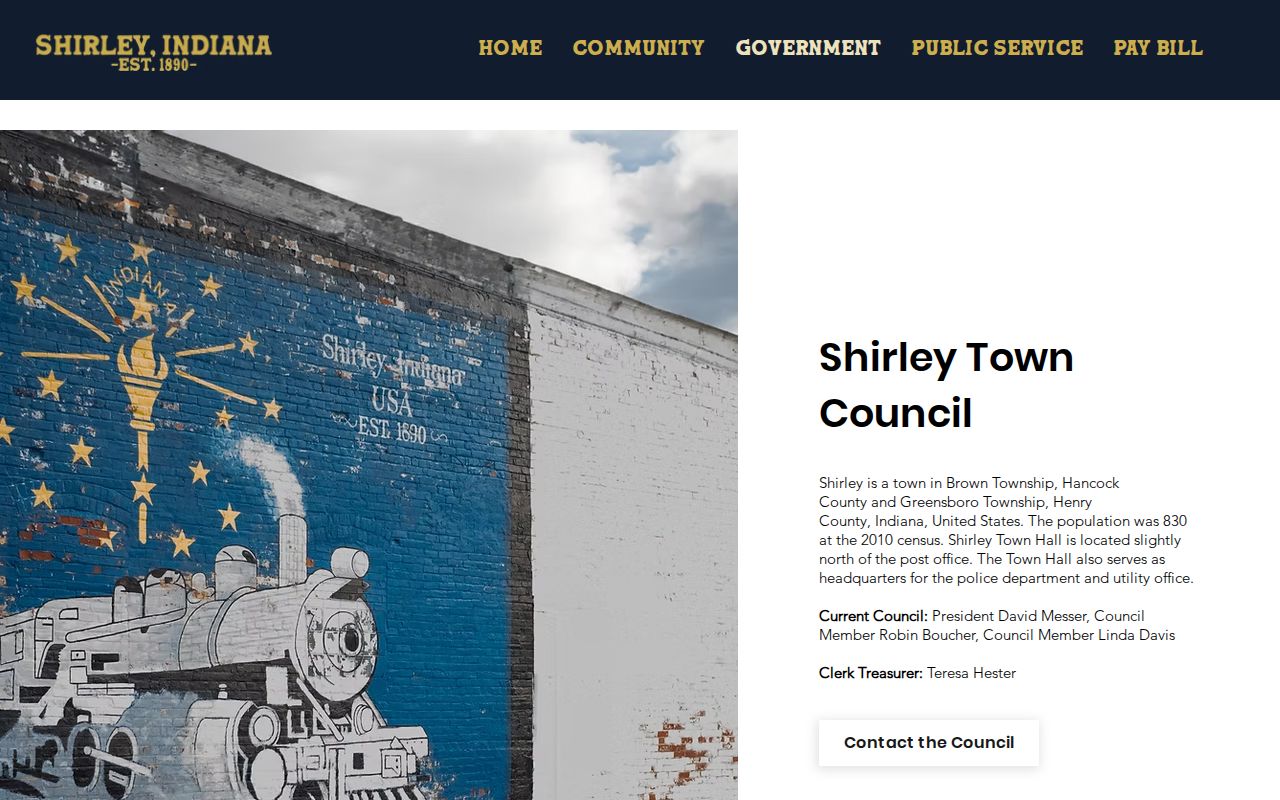
It helps separate Shirley civic records from judicial records before a request is sent.
Shirley Traffic Ticket Lookups
Before you search or pay, read the citation itself. The issuing agency, county, and court printed on a Shirley-area ticket control where the case lands. Shirley offers no ticket portal of its own. Most Henry County infractions go to Circuit Court 3. The citation and the eventual MyCase header still give the controlling answer. Search by the exact citation number or case number. Give a brand-new ticket time to appear if the county allows filing time.
Henry County lays out counter, mail, PayGov, and contest routes for traffic cases. Paying counts as admitting the violation. Contesting asks for a hearing instead. Never send money through a town-government channel just because the stop happened near Shirley. The Henry County traffic court record page walks through the full Henry process. A Hancock-side citation belongs to whichever court that ticket names.
Keep two files straight. A court traffic record and an Indiana BMV driver record sit with different custodians. The CCS shows the filed infraction, court events, judgment, and payments. The BMV file covers license status and administrative consequences. Use the court for the case and the BMV for the driver.
Shirley’s Railroad Town Context
Shirley began in 1890, according to the town's official community history. It grew with the rail lines. The 2020 Census counted 819 residents, fifth among the five Henry County incorporated places profiled here. That figure counts people, not court cases. Nothing about it implies the town runs its own court.
The community source gives the boundary and history that make Shirley distinct.
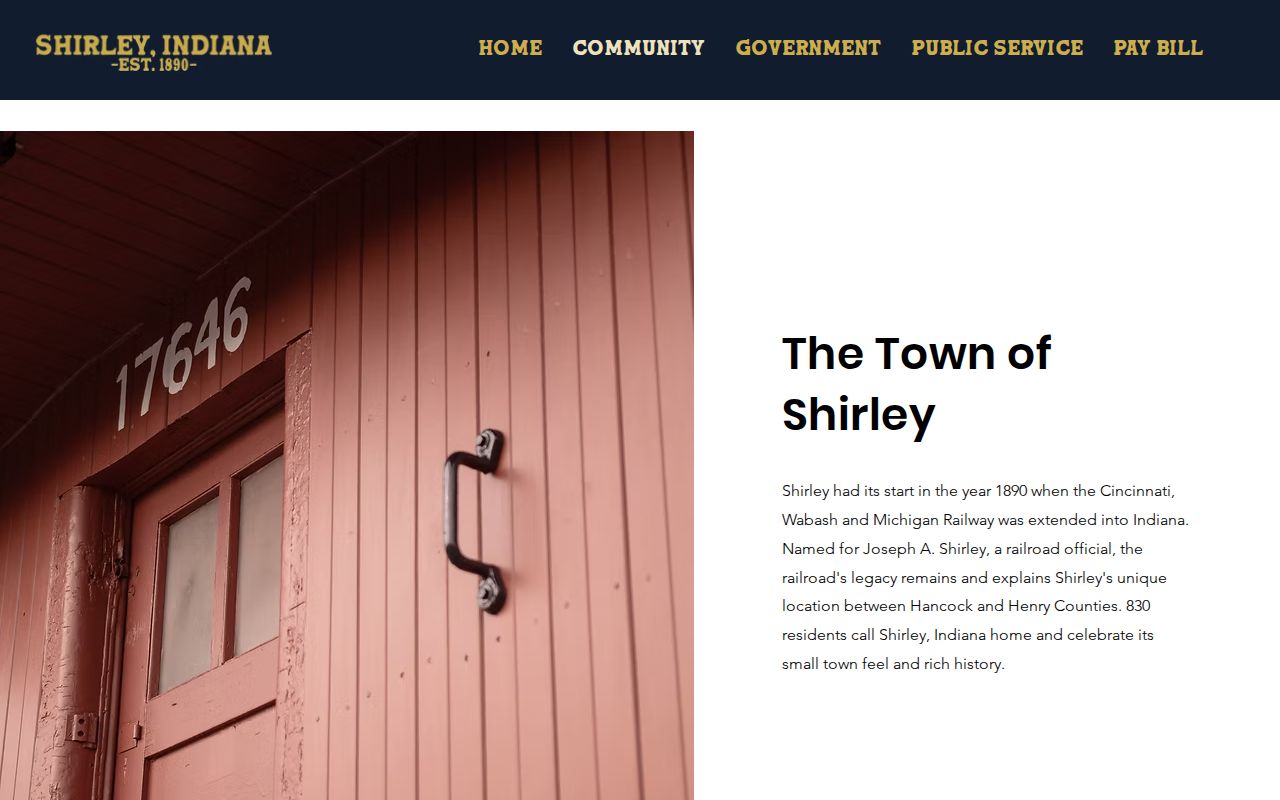
These local facts point to one lesson. A docket search needs county and court identifiers, not the Shirley name alone.
How Shirley Cases Reach the County
Every Shirley matter starts with a filing or issuing authority, never a municipal court. Henry-side cases land in the assigned Henry Circuit Court. Staff there keep the Odyssey record and the CCS. Hancock-side matters follow the other county route the case shows. Federal cases stand apart from both county trial systems. They run through federal docket channels.
Docket flow: Shirley event or filing › county identified by the case › assigned Indiana trial court › CCS
A Henry prefix tells you the court group: Circuit Courts 1, 2, and 3, or New Castle City Court. Trust the current case header over any assumed local venue. The Henry County court docket overview explains the county allocation in more depth.
Calling the Right Shirley Case Clerk
On the Henry side, the clerk is Jenny Grubbs, Henry County Clerk of Courts, at the Henry County Justice Center, 1215 Race Street, Suite 120, New Castle, IN 47362. Call 765-529-6401, fax 765-521-7046, or email document requests to clerkrequests@henrycounty.in.gov. Counter and mail requests work too. Before sending anything, confirm the payment method, delivery option, copying cost, and production time.
Give the clerk everything at once. Include the full case number, assigned court, party or case caption, and the approximate filing date. State the document or CCS event you need. Note whether a plain or certified copy is required. Hearing transcripts and audio records go through the court reporter route. This route differs from an ordinary clerk copy. If the number does not begin with 33, check MyCase to find the right county. Then call that court's clerk.
Boundary check: The right clerk follows the case number and assigned court, not the word “Shirley” in an address.
Who Can See Shirley Court Records
Indiana opens its courthouse doors on paper too. Access to Court Records Rule 4 presumes public access. Administrative Rule 9 covers both court records and the daily calendars. Public access does not mean everything is posted online. MyCase shows public case summaries and approved document categories, while other public items may need a clerk request. Rule 5 carves out protected categories, and a court order, seal, expungement, or statute can restrict still more.
Key Rules:
Access Rule 4 states the general right to inspect and copy public court records.
Access Rule 5 identifies court records excluded from public access.
Access Rule 9 governs requests to obtain access to excluded records.
Some material stays out of view. Juvenile, adoption, mental-health, sealed, expunged, protected-order, and similar sensitive information may be withheld, redacted, or left off the public display. An empty search result does not prove no case exists. The terms may be wrong. The case may sit in the other county. The matter may not be filed yet, or access may be restricted.
Reading a Shirley Court CCS
A Chronological Case Summary, or CCS, is the trial court's date-by-date record of what happened in a case. It is kept under Indiana Trial Rule 77. Read the header first. It carries the case number, court identifier, filing date, case type, caption, assigned court, status, disposition, and judge when displayed. Party labels shift with the case type. A criminal docket names the State and the defendant, while a civil file uses plaintiff and defendant or petitioner and respondent.
The event list underneath tracks each filing and hearing. It lists complaints, petitions, summonses, service returns, appearances, motions, notices, hearings, continuances, orders, judgments, payments, transfers, and appeals. One caution on dates. An entry date is not always the filing date or the hearing date, so read each line carefully. Settings show a date, time, location, judge, and setting type. Financial fields may list costs, fines, restitution, credits, payments, and a balance. Ask the clerk to confirm the current amount before relying on it.
- CCS
- The date-ordered official record of trial-court events.
- RJO
- The Record of Judgments and Orders associated with the case record.
- Setting
- A scheduled court event that may later be reset or continued.
- Disposition
- The recorded result, such as judgment, dismissal, conviction, or another final status.
Watch for a document icon next to an entry. That mark means an approved public copy of the filing exists for that event. A blank space tells you less than you might think. The document may simply not be posted. That does not mean it is sealed or lost. When in doubt, ask the assigned clerk for the event by title and date. Certified copies come only from the clerk's office, and sensitive personal identifiers stay redacted either way.
Shirley Federal Dockets Stay Separate
A federal case tied to Shirley will never show up as a Henry or Hancock Circuit Court CCS. The two systems do not mix. Federal matters land in the U.S. District Court for the Southern District of Indiana. Its docket records live in PACER. They are not in any state case lookup. CourtListener offers some public federal material for free. Even so, it is not a complete or certified source for a federal court docket.
The federal court's own page shows the separate system at work.
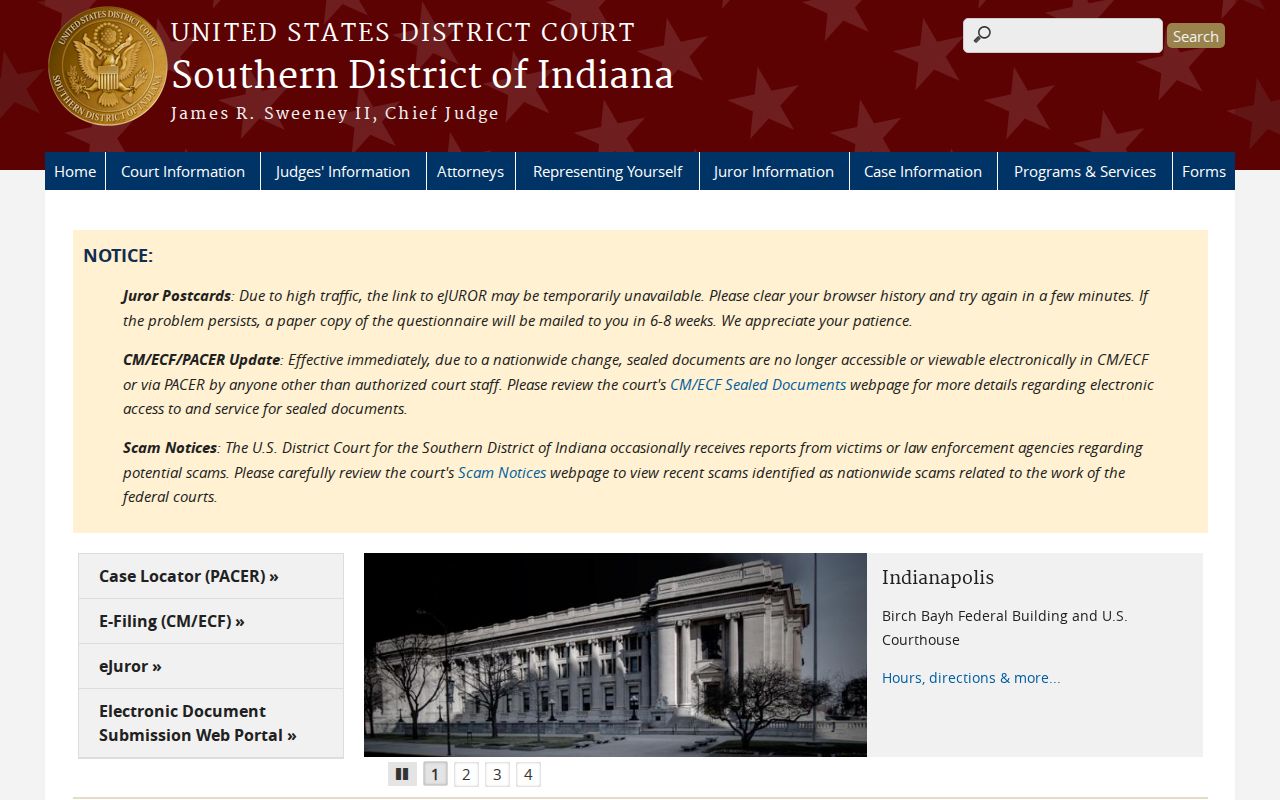
Use that page to tell a federal filing apart from a state trial-court case before you search by name. For this route, PACER is the federal docket channel.
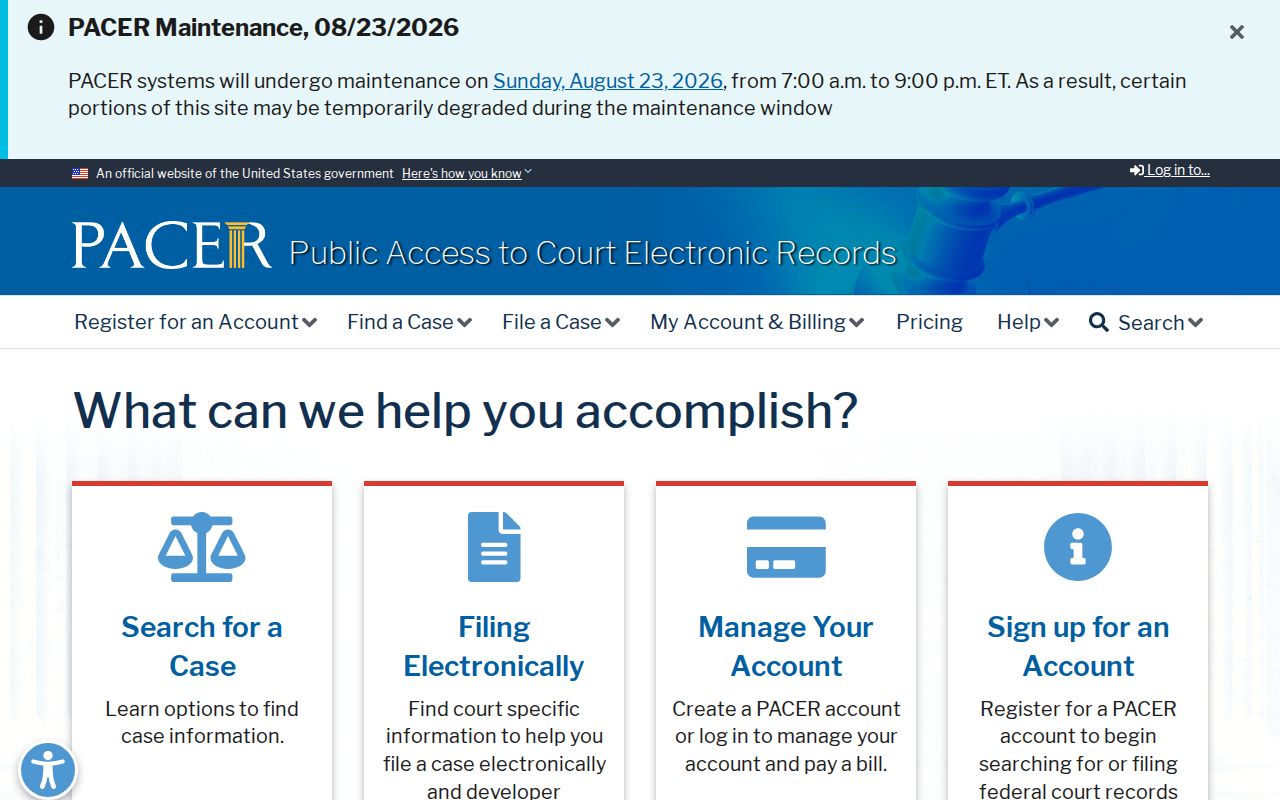
Federal access, accounts, and fees are separate from free anonymous MyCase searching.