
Henry County Civil Docket Searches
Start at Indiana MyCase. If you know a party or business name, choose Search by Name. Have the full filing number? Use Search by Case. Narrow results with the Court control to Henry Circuit Court 1, 2, or 3. Or add a case-type limit when a search returns too much. One caution: file-date fields match the date the case began, not hearing dates. Anonymous public searches on MyCase cost nothing. Treat it as an access copy, though, not the official record.
Is an entry or document absent online? The Henry County Clerk of Courts can help. Call 765-529-6401 or email clerkrequests@henrycounty.in.gov. Mail a request too, or visit Suite 120 at the Henry County Justice Center, 1215 Race Street, New Castle. Give the case number and the assigned court. Add the event title and the date range. Include delivery details, and say whether you need a plain or certified copy.
- Select the Name or Case tab in MyCase.
- Enter the party, business, or Henry case number.
- Limit the court or civil type if needed.
- Open the match and read its Chronological Case Summary.
- Ask the clerk to confirm documents, fees, or certification.
Henry Civil Cases Split Three Ways
Henry County splits its civil docket across three courts. Under local rules, civil plenary, collections, civil-docket evictions, dissolution, and paternity matters go to Circuit Court 1 or Circuit Court 2. Pro se dissolution filings alternate between them. Prosecutor-filed paternity matters are balanced the same way. Protective orders are divided too. Exceptions keep a new matter alongside a related dissolution, paternity, or protection case.
Small claims and evictions filed on the small-claims docket belong in Circuit Court 3. The split matters more than it sounds. Indiana recognizes both civil-docket EV and small-claims-docket EV. So an EV code alone cannot prove which court holds the file. Check the court identifier at the start of the number. Trust the current case header, since reassignment can occur.
| Civil lane | Henry route | Codes |
|---|---|---|
| General civil | Circuit 1 or 2 | CC, CT, PL, MF |
| Domestic and protection | Circuit 1 or 2 | DC, DN, RS, PO |
| Small claims | Circuit 3 | SC, small-claims EV |
Civil Dockets: What They Show
Indiana's official date-ordered trial record is the Chronological Case Summary, or CCS. The header gives the court, file date, case type, caption, status, and judge when displayed. Party roles usually read plaintiff and defendant, or petitioner and respondent. Attorney appearances show who entered the case. Service returns show whether process was reported to the court.
The register traces everything that happens. A complaint, summons, return of service, answer, counterclaim, motion, or discovery event may appear. Conferences, hearing notices, continuances, orders, judgments, dismissals, appeals, satisfactions, and enforcement events may all appear as well. Entry date and event date can differ. A document icon means an approved public copy is available remotely. It does not mean every paper in the clerk file is posted.
| Case number | Henry court, filing month, type, and sequence. |
|---|---|
| Parties | Public roles, names, appearances, and counsel. |
| Service | Summons, return, and notice entries. |
| Settings | Date, time, place, judge, type, and resets. |
| Outcome | Order, judgment, dismissal, satisfaction, or disposition. |
Henry Civil Case Codes Decoded
A case number works as more than a search key. Indiana Administrative Rule 8 breaks it into four groups. These are county and court identifier, filing year and month, case type, and sequence. Henry Circuit numbers begin with 33C01, 33C02, or 33C03. MyCase takes the full number without hyphens. Leading zeroes in the sequence can be dropped.
- CC
- Civil collection.
- CT
- Civil tort.
- PL
- Civil plenary, a general action.
- MF
- Mortgage foreclosure.
- SC
- Small claims.
- EV
- Eviction, with route based on its docket.
Other Henry summaries lean on different letter codes. DC or DN marks domestic relations, while PO marks protection orders. ES or EU marks estates. GU marks guardianship, and TR marks trusts. Labels help narrow a docket search, but they do not open every paper. Family, juvenile, protection-order, and fiduciary files may hold protected content.
What Cases Fill the Civil Docket
The Henry County civil docket carries a wide mix. Collections, tort cases, plenary actions, foreclosures, domestic relations, support, protection orders, small claims, evictions, estates, guardianships, trusts, tax matters, and other proceedings all appear. Each type follows its own path and access limits.
- CC tracks civil collections.
- CT tracks tort claims.
- PL is the broad plenary category.
- MF marks mortgage foreclosure.
- SC and EV cover small claims and eviction lanes.
- DC, DN, and RS identify domestic and support cases.
- ES, EU, GU, and TR cover estates, guardianships, and trusts.
Never guess the assigned court from a caption. The allocation rule is only a routing aid; the case header controls. New Castle City Court does not take dissolution, paternity, or general county civil filings.
Henry Civil Filings by Number
The 2024 judicial workbook shows how differently the lanes are used. Circuit Court 1 recorded 719 new CC filings. Circuit Court 2 recorded 443. Their new tort and plenary counts ran far smaller. Circuit Court 3 recorded 866 new SC filings and 258 new EV filings. These are new filings, not pending totals and not outcomes.
Those counts explain why court and type filters sharpen a Henry County search. SC and small-claims EV cases sit in Circuit Court 3, while broader collection or plenary actions land in Circuit 1 or 2. Filing counts never reveal whether a claim succeeded.
Hearings on the Civil Docket
Setting entries on a Henry County civil docket can carry a lot of detail. Expect a date and time, the courtroom, the judge, and the type of event. Some entries do more than set a hearing. A scheduling order, a conference, mediation, or a continuance may show up instead. A notice can knock out an earlier date. Check the CCS entries nearby, because a reset creates a new event and the old setting is history, not the current plan.
Three tools settle a question fast. Use the State Hearing Calendar. Use the MyCase detail page. Add whatever notice the court sent in the case, and compare the three. If they disagree, call the assigned Circuit Court or the clerk. For an appearance, the court notice plus direct confirmation from the court control. The Henry County court schedule walks through the confirmation chain when a date has moved.
Henry Civil Orders Without PDFs
Sometimes a CCS event appears with no document icon beside it. MyCase still gives remote access to nonconfidential orders and documents across many civil matters. Think collections, torts, foreclosures, plenary and small claims, evictions, and estates. Not everything gets posted, though. A missing PDF only means that remote view cannot hand it over. It says nothing about what the clerk's file holds.
To ask for a copy, start with the details. Write down the event title, entry date, case number, and court. Then contact the clerk by email, phone, mail, or at the counter. Say whether a plain copy works or whether you need it certified. The clerk can quote the page count, copy charge, and certification amount. Payment methods and delivery options are part of that quote. Filing fees and copy fees are different animals.
One caution. The county's online forms collection holds civil procedure forms, not a generic copy-request form. That collection is for filing something new, not for ordering an existing record. The clerk's office handles record requests its own way.
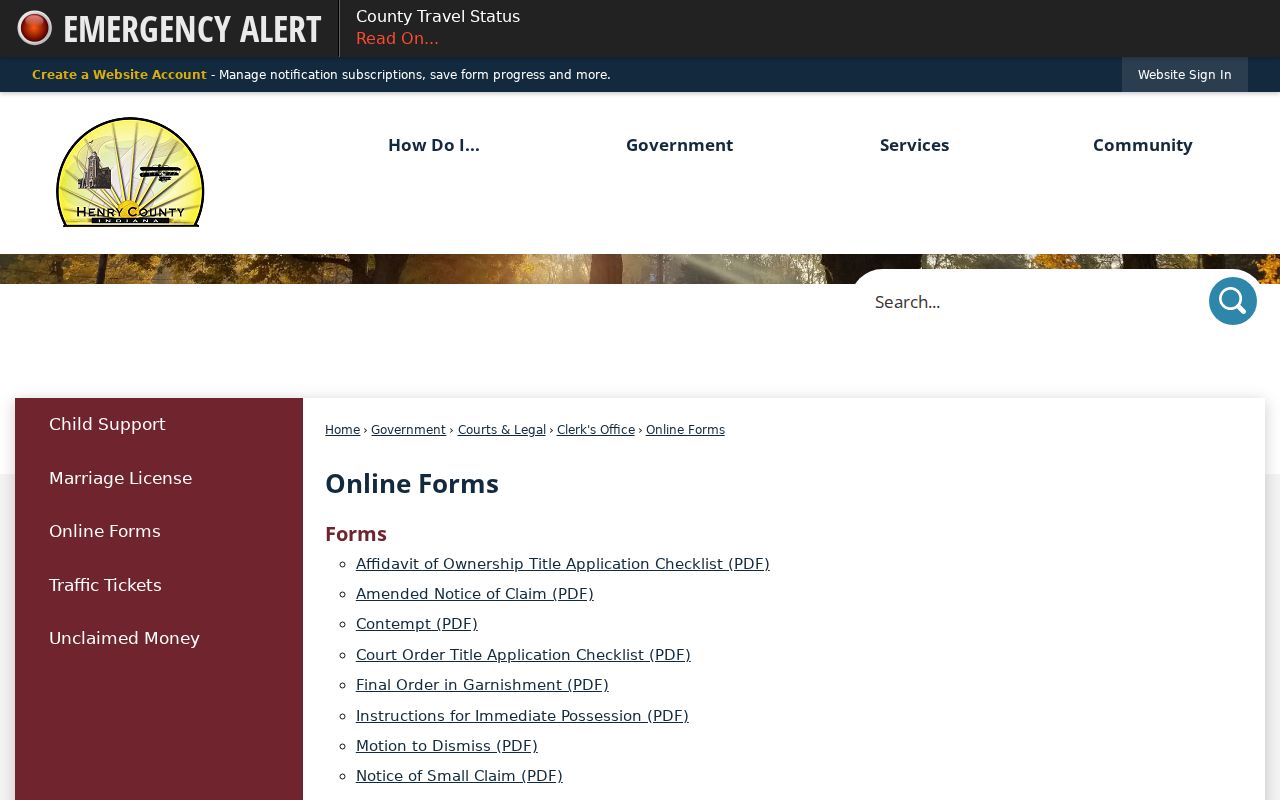
The example separates a form used to file something new from the clerk's route for pulling a record that already exists.
Who Can See Civil Dockets
Indiana opens its court records by default. Access to Court Records Rule 4 presumes access. Rule 5, another law, a court order, sealing, or expungement can take material out. Administrative Rule 9 then splits the world into courthouse access and remote access. Access to a public docket summary does not open every filing linked to it. Protected identifiers can be redacted. An excluded item may have no public copy at all.
Access rules:
Rule 4 states the public baseline.
Rule 5 identifies excluded records.
Administrative Rule 9 governs courthouse and remote access.
Want material that has been excluded? Rule 9 lays out a verified written process for that request. It is not an invitation for staff to ignore the restrictions. The court must weigh the request first. The record stays confidential while it does.
Henry Civil E-Filing and CCS
Henry County civil filings run on the state's electronic pipeline. Indiana's Electronic Filing System pushes accepted filings through its manager. They land in Odyssey, the platform Henry County uses. Attorneys must e-file wherever the rules require it. People without lawyers are encouraged to file electronically but usually are not forced to. Note the difference: filing a paper and viewing it remotely are two separate questions.
The Indiana e-filing program explains the providers. Henry Circuit Courts joined Odyssey in 2011. Older matters may show up as converted events imported from a prior system. A converted event is never a new filing.
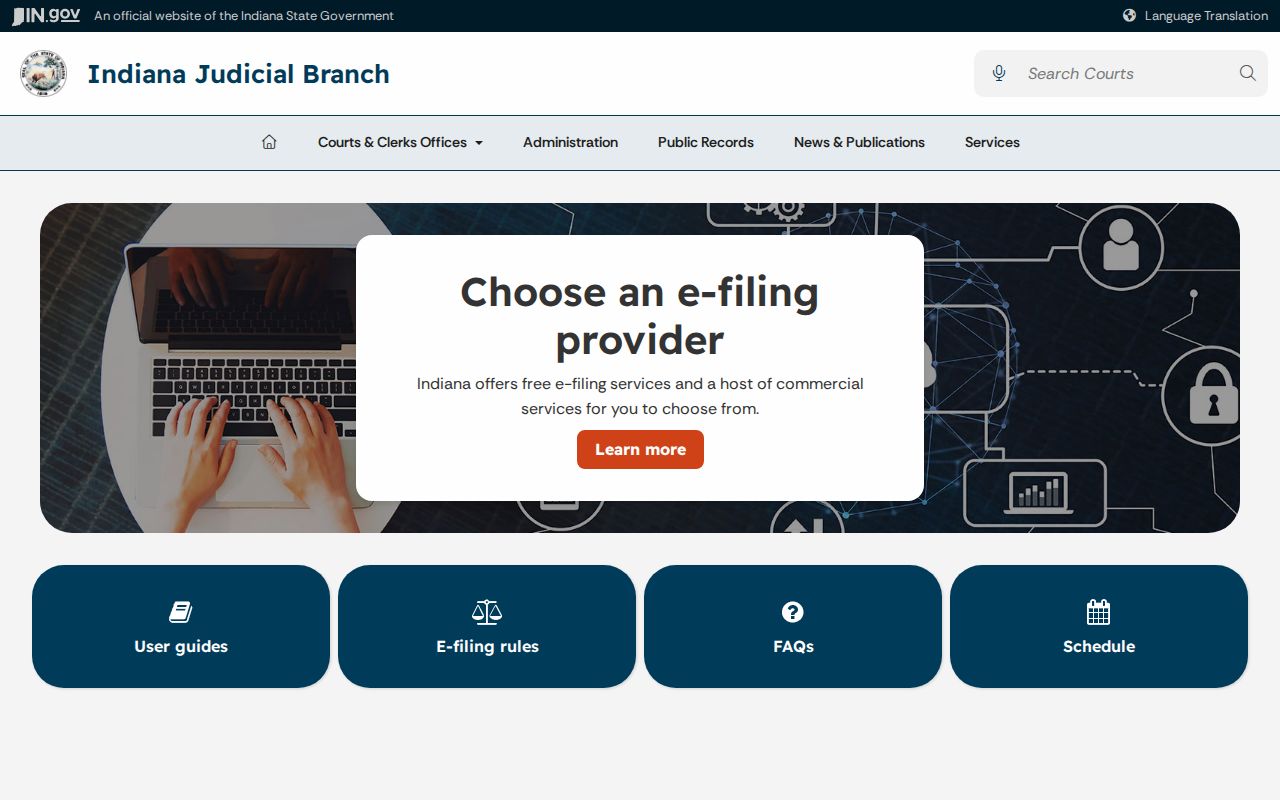
The state page shows the filing system behind current electronic case activity, while the clerk keeps the official record. For case numbers, Administrative Rule 8 defines the structure.
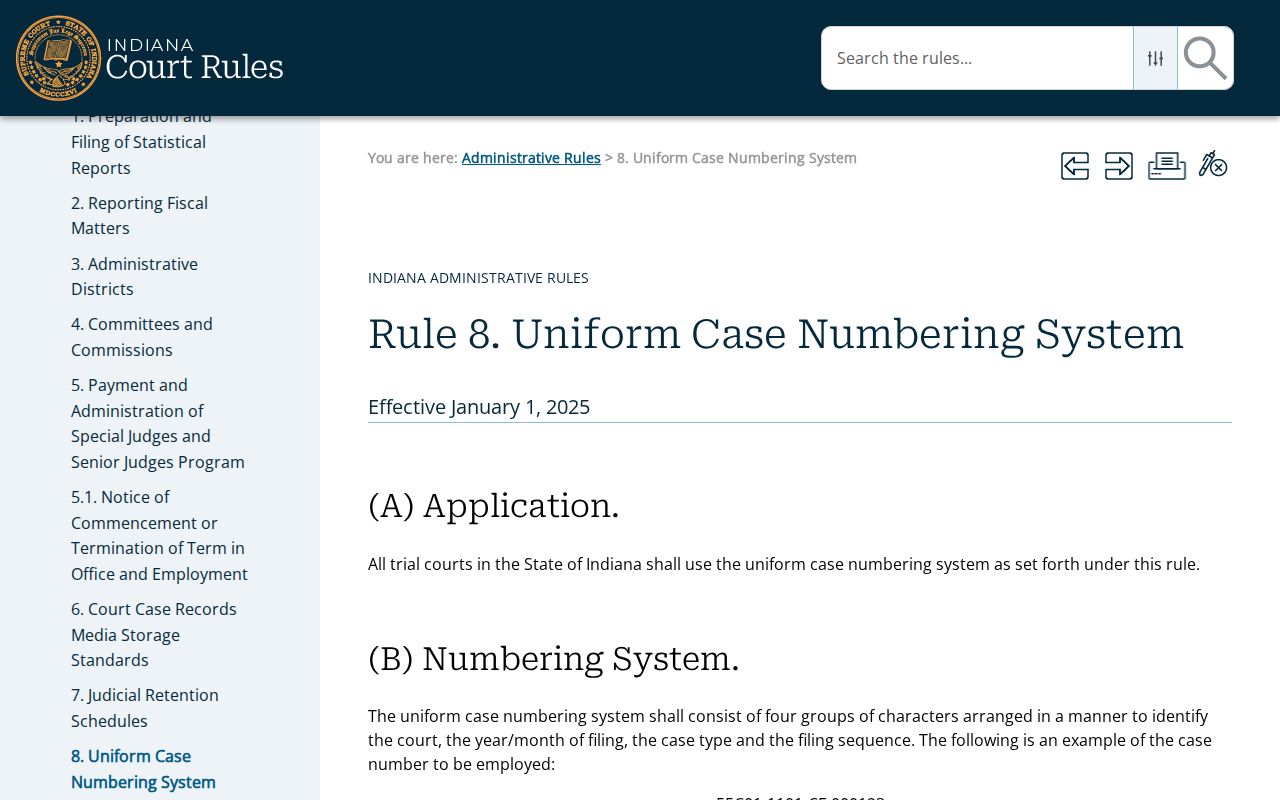
Its four groups let a searcher identify court, filing month, type, and sequence.